
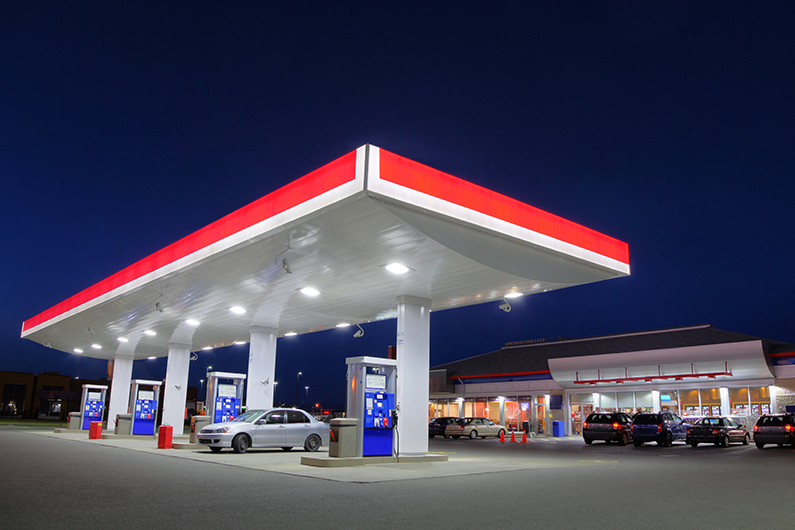
How Convenience and Gas Retailers Can Grow in a Consolidating Market
Learn how convenience and gas retailers can strengthen their finances, seize growth opportunities, and compete in a consolidating market.
Key takeaways:
- Despite industry consolidation, improving operations and expanding the platform are achievable goals for many convenience store and gas retailers.
- Timely, well-organized financial reporting and sound capital structures are crucial for securing the necessary financing to act on growth opportunities.
- Early succession planning allows operational continuity through a transition and guards against an unwanted sale.
- Beyond lending capital, financial partners with industry experience can provide the strategic guidance and technological solutions that independent retailers need to grow and sustain a lasting legacy.
Prospering in a consolidating industry
For the better part of a decade, a persistent narrative has dominated the convenience and gas retail industry: Sell or be driven from the market. The consolidation wave is real, as larger industry players have steadily scooped up smaller peers. But an exit isn’t the only possible strategy for retailers, particularly those with a solid local brand, loyal customer base and strong management. With access to convenience store and gas station financing, as well as business growth financing options, independent retailers may have opportunities to invest in their businesses, expand their footprint and compete more effectively in an evolving market.
Across the country, many smaller convenience store and gas retailers choose a different path, says Steven Wheelon, executive director and head of convenience & gas within Corporate & Investment Banking at Fifth Third Bank. "These are chains with real equity in their local markets—a name customers recognize, a reputation built over decades and in many cases a second or third generation already working their way up through the business," he says. "They’re not waiting to be acquired or looking to cash out. They’re planning to continue to build and expand their business."
Often, what separates those able to succeed at building a sustainable business from those who stall out isn’t just operational expertise; it’s having the right financial infrastructure and strategy in place to support continued operations and future expansion. Even an operator with profitable stores, deep community roots and strong marketing savvy can hit a roadblock if their business is hampered by a fragmented balance sheet, liquidity issues or weak financial reporting.
Getting finances in order
From site upgrades and investments in technology to an acquisition or new build, the next stage of growth often entails an infusion of funds, adds Wheelon, who advises retailers to get "bank-ready" before they seek out a lender with whom they can develop a strong financial relationship. "We’ve been approached by great companies that could have been ideal lending candidates if they weren’t months behind on their financial statements," he explains. "Having your financial house in order is critical to having access to capital."
For small and midsize chains that grew organically over time, that often means upgrading from basic accounting systems and year-end processes that haven’t scaled in step with the company’s expansion. In some cases, retailers can work with their banker to overcome reporting gaps and weak financial reporting through a quality-of-earnings process, but the process takes time. Steps like bringing in more sophisticated accounting support, upgrading reporting systems or hiring dedicated financial leadership can help businesses line up the capital they need when growth opportunities emerge.
"The larger the loan amount, the higher the level of financial reporting required," says Wheelon. "For example, if you’re seeking a smaller loan, we may accept a CPA compilation from sales figures provided by your internal accounting department, whereas larger financing could require a CPA review and eventually a CPA audit."
Strengthening liquidity for long-term growth
Balance sheet management is critical in capital-intensive industries like convenience and gas retail, where businesses must navigate fluctuating fuel margins, interest rates, labor costs, consumer spending and energy rates. Without sufficient cash reserves or access to working capital, businesses can quickly become overextended when market conditions shift.
Higher fuel costs, for example, can put added pressure on liquidity. "When transaction costs increase dramatically, suppliers sometimes require small or midsize operators to post letters of credit to secure their purchases because they need security for that exposure," says Wheelon. Liquidity can be especially challenging for multilocation operators that have funded expansion one property at a time, accumulating a series of asset-based loans from local banks. While individual loans may involve simpler underwriting, over time they can create a fragmented balance sheet that makes securing larger-scale institutional financing more difficult.
Streamlining capital structure
Lenders with expertise in financial solutions designed for multiunit convenience store chains can help retailers clean up disjointed balance sheets and add borrowing capacity through financing secured by the collateral value of the company’s real estate portfolio and the cash flow it generates. "Let’s say your real estate holdings appraise at $100 million," explains Wheelon. "We may be able to advance up to, let’s say, 75% against that, but then we’ll also use a cash flow metric to secure a higher revolving line of credit that the company can come in and out of when they need capital."
For operators with a solid track record of earnings, strong financial reporting and a healthy cash flow, financial partners also offer access to a development line of credit that can be tapped to pursue an acquisition or development opportunity. While a conventional line of credit is secured by a company’s existing collateral value and cash flow, a development line of credit is based on projections of the incremental value and cash flow that the new site will bring in.
The approval process is rigorous, notes Wheelon. "We go through years of financial statements, check the financial performance of previous sites they purchased, visit and eat at their stores and spend time on the ground with the operator," he says. "But operators that meet the standards gain the ability to move quickly on an opportunity."
Planning for an eventual transition
Succession planning is another key area of financial planning for convenience and gas operators planning to build a legacy. Working with a banker who has expertise in the transfer of family-owned businesses in capital-intensive industries can help operators address governance, liquidity and estate considerations to ensure that an ownership transition doesn’t force the sale of the business.
Getting help with transition planning is crucial. In addition to guiding operators through laying the groundwork for a smooth succession and preparing for future expansion, lenders with experience in the convenience and gas industry can help operators explore evolving retail solutions that boost productivity and streamline operations. "From technology that evaluates potential locations by assessing traffic patterns to enhanced cash management capabilities such as smart safes, we have tools and technology that can make people’s lives a lot easier," says Wheelon.
Access to that broad advisory capability, along with solutions such as convenience store financing and working capital financing, gives future-focused retailers who want to remain independent the resources they need to ensure the longevity of their business in a competitive marketplace. "Collectively, our team has spent decades in this space, and we’ve learned that financial, operational and strategic modernization is the key to long-term success," says Wheelon. "Our role extends beyond lending capital to helping these companies build the infrastructure, flexibility and resilience they need to create a lasting legacy and serve their communities for generations to come."
Fifth Third’s Corporate & Investment Banking Group brings deep expertise, market insight and customized financing solutions to help convenience retailers navigate the evolving forecourt and energy landscape. Learn more here.